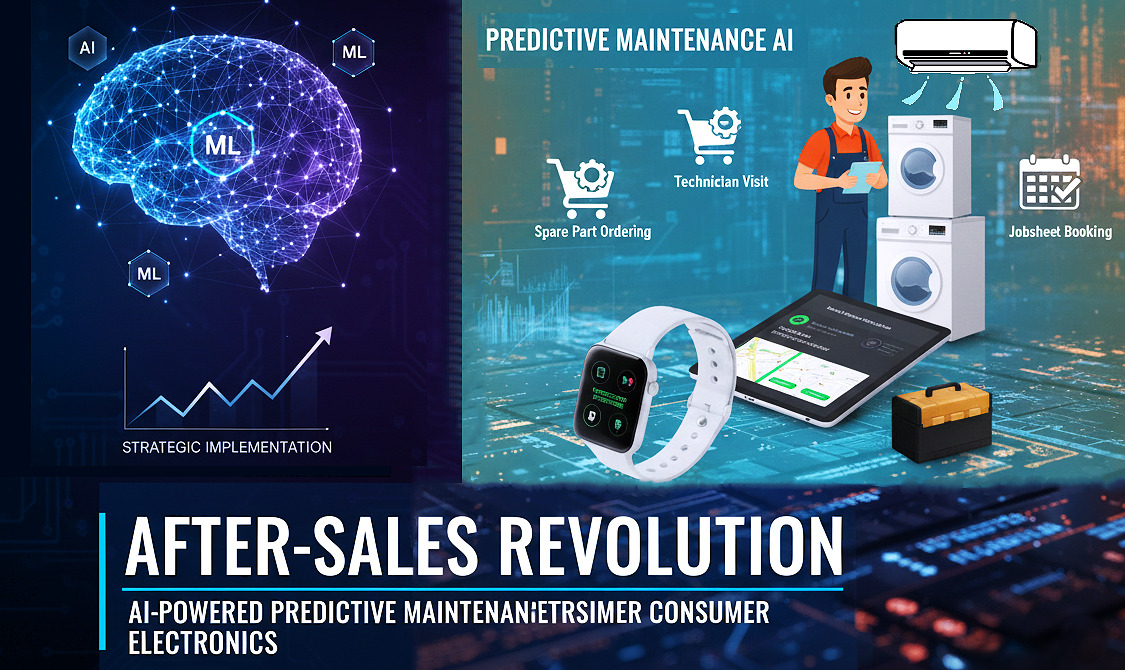
How AI in Predictive Maintenance Is Revolutionizing After-Sales Service
Introduction
In today's competitive world, after-sales service is no longer an add-on, but an integral part of the customer experience. Whether it is a consumer electronic product or a connected IoT device, customers expect support that is quick, proactive, and hassle-free.
Traditional service models rely heavily on reactive processes where issues are addressed only after a failure occurs. This often results in downtime, repeated service visits, and increased operational costs. Predictive Maintenance AI changes this approach by identifying issues before they escalate into breakdowns.
What Exactly Is Predictive Maintenance AI?
Predictive maintenance uses AI and machine learning to analyze historical and real-time data. These models detect patterns, warning signs, and anomalies that indicate a potential failure.
In simple terms, instead of waiting for a machine to break, AI predicts what will fail, when it will fail, and why.
- Far fewer failures
- Reduced downtime
- Smarter spare parts planning
- Happier and more loyal customers
Why Predictive Maintenance Matters in After-Sales Service
1. Fewer Unexpected Breakdowns
AI models learn from years of failure logs, service history, sensor data, and usage patterns. This allows service teams to take preventive action before customers experience failures.
2. Higher First-Time Fix Rates (FTFR)
When technicians know the likely issue in advance, they arrive with the right tools, spare parts, and diagnostic insights, reducing repeat visits and service costs.
3. More Precise Spare Parts Forecasting
Machine learning predicts which components are likely to fail in upcoming weeks or months, helping companies avoid overstocking while preventing critical shortages.
4. Better Utilization of Service Resources
AI helps estimate future service workloads, enabling managers to deploy technicians and resources more efficiently and deliver higher service quality.
How GSPL’s AI/ML Tools Enable Predictive Maintenance
GSPL embeds advanced AI capabilities directly into existing service workflows to deliver measurable impact.
- Failure prediction models
- Smart spare-part demand forecasting
- Automated diagnostic suggestions for technicians
- LLM-powered service chatbot
- Real-time dashboards and KPIs
- Seamless integration with GSPL SMS (Service Management System)
One GSPL client reported a 46% reduction in job sheet issuance by adopting predictive maintenance and AI-driven diagnostics.
Conclusion
Predictive Maintenance AI is no longer futuristic technology—it is becoming a necessity for organizations aiming to reduce service costs, minimize downtime, and improve customer satisfaction.
If your after-sales operations still depend on reactive troubleshooting, now is the right time to explore what AI-driven predictive maintenance can deliver.